



You drop off your suitcase at the airport, watch it disappear behind the check-in counter, and usually stop thinking about it. From that moment, the bag starts a journey of its own.
It moves through a complex airport environment: conveyors, scanners, sorters, control systems, storage areas, loading points, and sometimes several decision points before it reaches the aircraft. At the destination, the same process continues in reverse, until the bag appears at baggage claim.
This journey is made possible by a Baggage Handling System (BHS).
At Dimark, this is exactly what we do. We design, manufacture, implement, modernize, and support baggage handling systems (BHS) for airports. Our work covers both the physical equipment that moves baggage and the software that helps control, monitor, simulate, and maintain the system.
What is a baggage handling system (BHS)?
A Baggage Handling System is the infrastructure responsible for transporting checked baggage through the airport. It connects different parts of airport baggage operations, from check-in and security screening to sortation, storage, loading, transfer, and baggage claim.
For passengers, airport baggage handling is usually visible only at two moments: when they drop off their bag and when they collect it. For the airport, it is a continuous operational process that supports flight departures, arrivals, transfers, safety procedures, ground handling, and passenger flow.
A modern BHS combines mechanical equipment, automation, baggage tracking technology, control systems, and baggage handling software. Together, these elements help the airport move each bag in the right direction, at the right time, with as little disruption as possible.
The journey of a bag
The process usually starts at check-in. The bag receives a tag and enters the system. From there, it travels on a baggage conveyor and is identified by the system. Depending on the airport setup, this can involve barcode reading, Automatic Tag Readers, RFID chips, or other automated tracking systems.
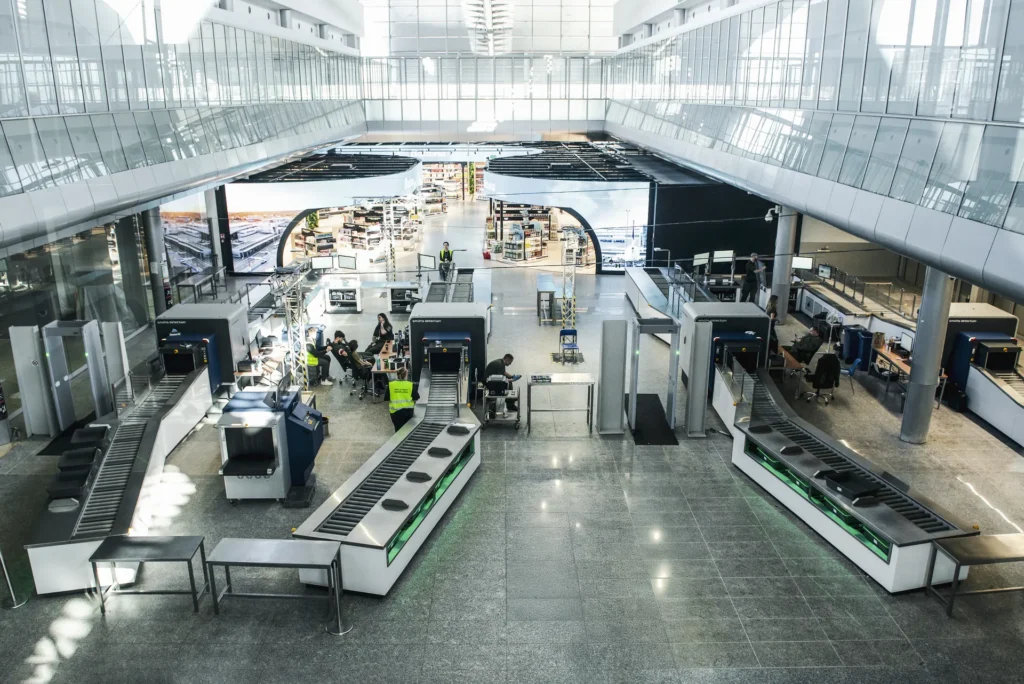
The bag then moves through security screening. In many airports, this includes integration with an Explosive Detection System (EDS). The BHS has to support this process by moving bags through screening equipment and sorting them according to the result.
After screening, the bag enters the sortation area. Baggage sortation means that the system decides where the bag should go next. This may involve sorting devices, diverters, a Cross-belt sorter, a tilt-tray sorter, or an Independent Carrier System (ICS). The goal is to send each bag toward the correct flight, transfer route, storage area, or loading point.
In some airports, bags can also go into automated baggage storage. This is useful when baggage arrives early, when transfer times are long, or when the airport needs more flexibility in managing baggage handling capacity.
Later, bags are prepared for loading. This part of baggage handling operations may involve different types of handling technology, or other equipment used by ground handling teams.
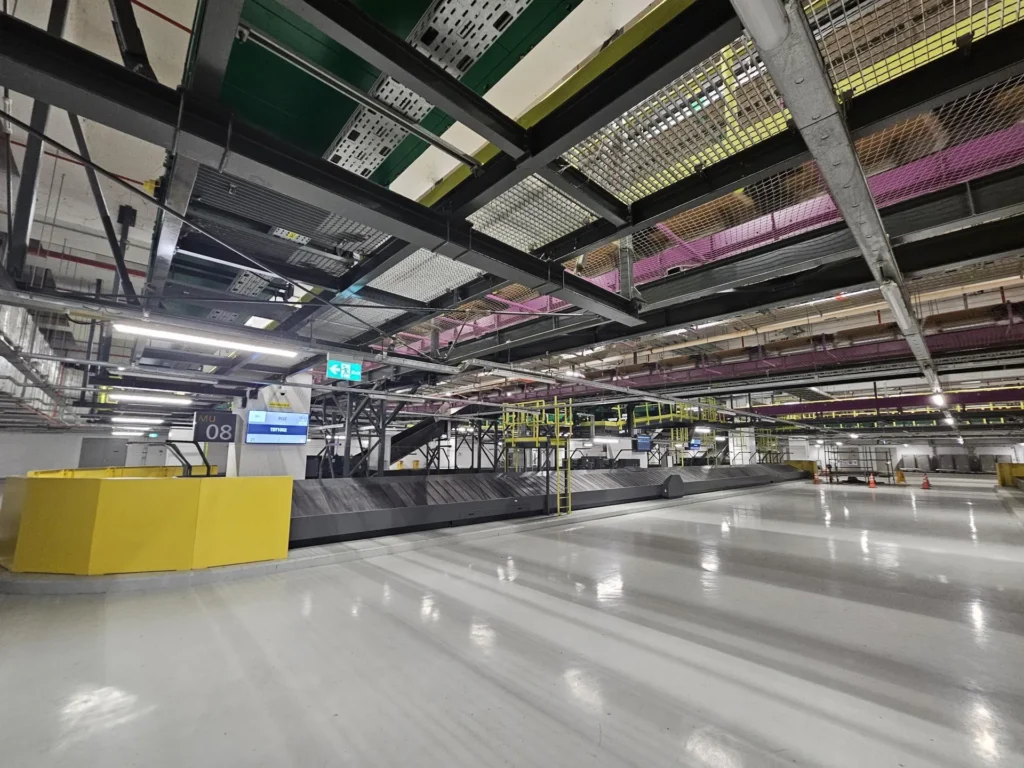
At the destination airport, the bag continues through another part of the system and finally reaches baggage claim. Baggage reclaim carousels are the final point in the passenger journey, but they are also the result of everything that happened earlier inside the system.

Why BHS matters for airport operations
A Baggage Handling System (BHS) has a direct impact on airport performance. If baggage flows smoothly, the airport can support departures, arrivals, transfers, security processes, and passenger service more efficiently.
When the system is not planned or maintained properly, the effects can be visible quickly. Bags can be delayed, sent to the wrong area, held in the system for too long, or create pressure on operational teams. This is why efficient baggage handling is closely connected with reliable baggage operations and the overall travel experience.
BHS also affects long-term airport planning. Growing airport passenger volumes often require higher baggage handling capacity, better automation, more advanced software, and stronger maintenance processes. In high-speed baggage handling environments, even small delays or recurring faults can influence the wider operation.
The main parts of a BHS
Every airport is different, so every baggage handling system (BHS) is designed around a specific terminal layout, flight schedule, operational model, and growth plan. Still, most systems include several core areas.
Check-in and induction
This is where checked baggage enters the system. The bag is identified and transferred into the airport baggage handling flow.
Conveyors and transport lines
Baggage conveyors move bags between different zones of the terminal. They connect check-in, screening, sortation, storage, make-up, transfer, and baggage claim areas.
Security screening
Security screening systems inspect baggage before it is loaded onto an aircraft. The BHS supports this process by moving bags through screening equipment and managing their next route.
Sortation
Baggage sortation directs each bag to the correct destination inside the system. Sorting devices help reduce errors in baggage direction and support smooth baggage flow.
Storage and make-up areas
Automated baggage storage and make-up areas help airports manage timing, capacity, and preparation for loading.
Baggage claim
Baggage claim is where passengers reconnect with their bags. The quality of this stage depends on the reliability of the entire process before it.
Software and control systems
Baggage handling software supports tracking, routing, visualization, diagnostics, reporting, and maintenance. It gives operators and technical teams better visibility into what is happening inside the system.

Greenfield BHS projects
A greenfield project means building a baggage handling system (BHS) for a new airport or a new terminal. In this type of project, BHS planning can begin early, together with architects, consultants, airport authorities, and construction teams.
This allows the system to be designed around the airport’s future operations from the beginning. Space, capacity, passenger flows, maintenance access, baggage routes, and system expansion can be considered before the infrastructure is built.
For Dimark, greenfield projects involve early-stage design, system layout planning, BIM coordination, in-house production, implementation, and preparation for future airport operations. Digital tools such as DiSign help validate the system layout, adjust parameters during the design process, and support better coordination between the BHS and the terminal architecture.
More information about our greenfield projects: Greenfield – Dimark

Brownfield BHS projects
A brownfield project means working with an existing airport or terminal. The system is already operating, passengers are moving through the airport, flights continue, and baggage handling operations cannot simply stop for a long period.
This makes brownfield modernization more complex. The existing baggage handling infrastructure has to be analyzed, upgraded, integrated, or replaced in planned stages. Risk analysis, phasing, simulation, and close coordination with airport teams become essential.
For Dimark, brownfield projects focus on modernization during live airport operations. This can include improving system performance, replacing obsolete technology, integrating new equipment, increasing capacity, and supporting continuity throughout the transition.
In this context, DiTWIN helps test modernization scenarios before changes are introduced into the live system. By using virtual emulation, teams can check control logic, validate planned changes, reduce integration risk, and prepare the implementation path before work begins on site.
Click here to read more about our brownfield realizations: Brownfield – Dimark

Dimark’s role in BHS
Dimark works across the full lifecycle of baggage handling systems (BHS). We support airports in design, analysis, simulation, manufacturing, implementation, modernization, software development, and long-term service.
Our portfolio includes ICS line equipment, tilt-tray sorter, belt conveyors, sorting devices, baggage reclaim carousels, and Automatic Tray Return Systems (ATRS). These technologies can be combined into customized baggage handling solutions adapted to the airport’s layout and operational requirements.
Read more about our devices: Devices portfolio – Dimark
Dimark also develops its own digital tools, including DiSign, DiTWIN, DiSCADA, and DiMS. They support system design, virtual testing, monitoring, diagnostics, maintenance, and optimization. This helps connect the physical movement of baggage with the digital systems that control and protect the operation.
More information about our software: Software – Dimark

BHS as part of the passenger experience
Passengers rarely see the full baggage handling hall. They do not see the control room, the sorters, the conveyors, the scanning points, the software decisions, or the maintenance processes that keep the system running.
But they feel the result.
When baggage arrives on time, the process feels simple. When it does not, the entire journey can feel less reliable. This is why BHS plays such an important role in airport operations, even if most of its work happens out of sight.
A well-designed and well-maintained Baggage Handling System (BHS) supports the airport, the airlines, the ground handling teams, and the passengers. It helps keep baggage moving, supports security requirements, improves operational flow, and contributes to a smoother travel experience.
Your suitcase may disappear behind the check-in counter for a while, but inside the airport, its journey is carefully managed from one stage to the next.

What is a baggage handling system (BHS) and what happens to your bag after check-in?
01 June 2026You Might Also Like

Greenfield BHS for Dhaka Airport’s New Terminal
18 June 2026A greenfield BHS project at scale in South Asia Hazrat Shahjalal International Airport in Dhaka plays a key role in Bangladesh’s international connectivity. As the country’s main international gateway, it connects South Asia with the Middle East, Southeast Asia, and other major travel routes. The new terminal is one of the region’s important infrastructure investments […]

Factory Acceptance Testing (FAT) has been successfully completed for another stage of Dimark’s baggage handling system project for Riyadh Airports. As part of the process, representatives of the customer team visited Dimark to review, test and verify the equipment before shipment. The successful completion of FAT marks an important project milestone and confirms that the […]

Airport representatives from Rabat, Casablanca and Marrakech recently visited Dimark for a comprehensive training programme focused on the practical aspects of baggage handling system delivery, implementation and operation. The visit was designed to provide a deeper understanding of the full project lifecycle, from production and shipment preparation to installation, commissioning and long-term operational support. Throughout […]
Let’s continue the conversation, and shape the future of airport logistics together.